
It’s a real loss
In patient communities, losing a license, failing a renewal eye test, or stopping night driving comes up again and again. People describe relying on family for rides, turning down jobs they couldn’t get to, missing evening events, and feeling embarrassed explaining why they don’t drive.
That matches research. In an interview study of 33 people with keratoconus in Sydney, driving was one of the areas of life people raised, alongside career, finances and relationships.[9] If it’s getting you down, our page on keratoconus anxiety and coping may help.
Before you give up: is better driving vision possible?
Not driving is sometimes the right call, and sometimes it isn’t necessary. Ask your fitter:
- Is my lens giving me the best vision it can? A refit, a different design or a change for ghosting or glare can make a difference. See halos, glare and ghosting.
- Is fogging or dryness dragging my vision down later in the day? That’s often fixable. See midday fogging.
- Has my eye changed? After cross-linking or a transplant, old lenses often no longer fit well.
- Is night driving the specific problem? See scleral lenses for night driving.
For what the vision test involves and whether to wear your lenses for it, see the driving vision test with scleral lenses.
Know the rules where you live
UK. You must be able to read a number plate from 20 metres away and meet a minimum visual acuity standard, wearing your glasses or contact lenses if you need them, and you must wear them every time you drive.[1] You must tell DVLA about an eyesight problem that affects both eyes, or the remaining eye if you have only one, and you could be prosecuted for driving without meeting the standard.[1]
US. Vision standards and reporting rules vary by state. Check with your state’s licensing office, and ask whether a restricted license, such as daylight-only driving, is an option where you live.
Elsewhere, check your national or state licensing authority.
Getting around
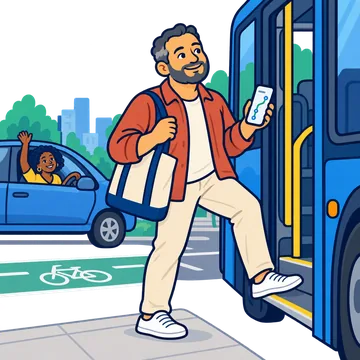
Plan a weekly transport routine rather than solving each trip on the day. Map out where you need to go regularly and match each trip to an option:
- Public transport, where it exists. Phone apps that read out stops and times can help if signs are hard to see.
- Rideshare and taxis for trips that don’t fit.
- Lifts from family and friends, planned and shared across people.
- Walking or cycling, where it’s safe for your vision.
- Living closer, if a move is ever on the table: some people choose where to live with transit in mind.
US: paratransit and reduced fares
- ADA paratransit. Where a public transit agency must offer ADA paratransit, riders qualify if a disability, including a vision impairment, stops them boarding, riding or getting off the regular accessible buses or trains without help.[6] Eligibility can be trip by trip, and can be based on a temporary disability.[6] Your local transit agency decides who qualifies.
- Reduced fares. Transit systems receiving a type of federal funding must charge eligible older and disabled riders no more than half the peak fare during off-peak hours.[7] Ask your local agency how to apply.
UK: bus passes and help with travel to work
- Disabled person’s bus pass (England). Local councils issue these under the English National Concessionary Travel Scheme.[4] The law that sets it up includes, among the people who qualify, anyone who is blind or partially sighted and anyone who would be refused a driving licence on medical grounds.[5] Scotland, Wales and Northern Ireland have their own schemes.[4]
- Access to Work. If you have a paid job, or are about to start one, in England, Scotland or Wales, Access to Work can help with the costs of travelling to work if you can’t use public transport.[2] [3] Northern Ireland has a different system.[3]
Nights out: concerts, bars and getting home
Many people in patient communities say keratoconus makes them think twice about evenings out, not only because of driving. Dim rooms, stage lights and glare can make faces and steps hard to see, and lenses that were fine in the morning may be foggy or dry by the end of a long day. Some people stop going. Many keep going with a bit of planning:
- Sort the ride home first. Book a taxi or rideshare, check the last train or bus, or agree a lift with a friend before you go, so you’re not working it out late at night.
- Plan your lens day around the evening. If your lenses tend to fog or get uncomfortable late in the day, ask your fitter about the timing, a fresh fill, or what to carry. A small kit and your glasses mean you can take a lens out if you need to. Check the venue’s bag rules first; see traveling with scleral lenses.
- Choose where you stand or sit. Spots with steadier light, near an aisle or an exit, are easier than the darkest corner, and a phone light helps on stairs.
- Tell the people you’re with. A friend who knows you don’t see well in the dark can steer you to the exit or the meeting point.
If glare and halos are what keep you home, that’s worth raising with your fitter, since it can sometimes be improved. See halos, glare and ghosting.
Work when you can’t drive
Getting to work is a legitimate thing to raise with an employer. The US equal employment agency lists modified work schedules, including to make it easier to use public transport or paratransit, and telework as possible accommodations for people with visual disabilities.[8] It also gives the example of an employee with low vision being excused from driving that isn’t an essential part of their job.[8]
If driving is an essential part of a job, the picture is different, and some jobs have their own vision standards. Talk to your employer, and in the UK ask Access to Work what support is available.
For rehabilitation and benefits, see low vision services, benefits and support, and for other conditions that affect your sight, scleral lenses with other eye and health conditions.
Looking after yourself
- Name the loss. It’s normal to feel grief, anger or embarrassment about not driving.
- Have a short, easy explanation ready for when people ask: “My eye condition means I’m not safe to drive right now.”
- Keep doing the things that matter to you, even if getting there takes more planning.
- Talk to others who’ve been there. Many people describe getting back on the road after treatment or a better lens, and many build full lives without driving.
If you feel low most days, tell your doctor. See keratoconus anxiety and coping.
Common questions
My vision passes in the morning but not by evening. Can I drive?
Only when you meet the vision standard for driving where you live. Many wearers find their vision fades with fogging or dryness later in the day. Tell your fitter: fogging can often be improved. Until then, plan to drive only when your vision is reliably good, and don't drive if it isn't.
Do I have to tell the licensing authority about keratoconus?
In the UK, you must tell DVLA if you have any eyesight problem that affects both eyes, or the remaining eye if you only have one, and you could be prosecuted for driving without meeting the vision standard. In the US, rules vary by state, so check with your state's licensing office. Our driving vision test page has more.
Will I get my license back?
Many people do, after a better lens fit, cross-linking that steadies the eye followed by a refit, or surgery. It isn't guaranteed. Your fitter can tell you whether your vision with lenses could reach the standard, and what's stopping it now.
How do I ask friends and family for lifts without feeling like a burden?
People who manage it well tend to plan ahead rather than ask last-minute, share the cost of fuel or parking, offer something back, and spread the asks across several people. Being specific helps: a regular lift on Tuesdays is easier to say yes to than open-ended help.