
Clearer vision starts with scleral lenses.

Understand your eye condition, and learn to wear scleral lenses with confidence.
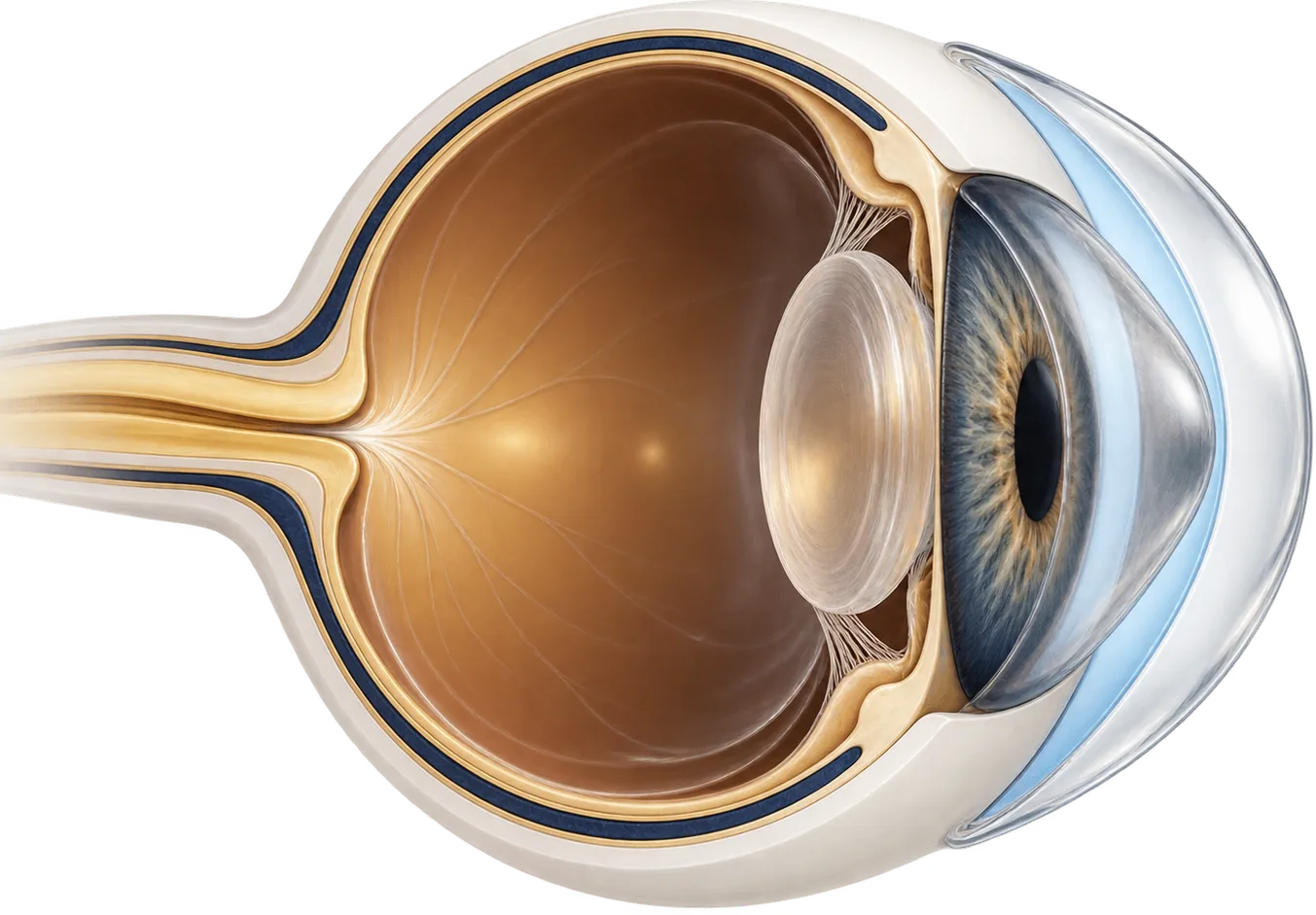
Illustrated cross-section of an eye with keratoconus, with a scleral lens arching over the cone-shaped cornea on a layer of saline
All conditions Every condition scleral lenses are used for Keratoconus The most common reason people get sclerals Severe dry eye When drops and plugs aren’t enough Corneal transplant Clear vision after a graft After LASIK Ectasia and irregular vision after surgery Sjögren’s Protecting a dry eye surface all day Ocular GVHD Eye care after a stem-cell transplant Corneal scars Irregular vision from injury or infection Insertion & removal Putting lenses in, taking them out, daily care Questions, answered Short answers to specific scleral lens questions

The basics

What is a scleral lens?

  1. A large, rigid, custom lens. It rests on the white of the eye (the sclera) instead of on the cornea.
  2. Filled with saline before it goes in. That fluid sits over the cornea, smoothing out an irregular surface and keeping a dry one moist.
  3. Made for eyes other lenses can’t help. Mostly irregular corneas, like keratoconus or after a transplant, and severe dry eye.
See every condition
SoftRigid (RGP)Scleral
Rests onThe corneaThe corneaThe white of the eye
Touches the corneaYesYesNo, it vaults over it
Irregular corneasDrapes over the shapeSmooths it, can shift off-centerSmooths it with a fluid layer
Keeps the cornea wetNoNoYes, holds saline all day

Wondering why they’re called scleral lenses when they treat the cornea? It’s all about where they rest

Wherever you are

Start where you are in the journey

Solutions masterclass

Saline, cleaner, peroxide: which one, when?

The bottles look alike and the rules don’t. What each product is for, what never touches your eye, and what to try when a solution isn’t working for you.

Start the masterclass

Asked again and again

What wearers ask most

All 120 questions
Why do my scleral lenses burn when I put them in?Take the lens out first. The most common cause wearers find is something left on the lens or your fingers: cleaner, multipurpose solution, soap, or peroxide that wasn't fully neutralized. Next comes the fill saline itself, then technique, then fit and dry eye. If burning continues after the lens is out, or comes with pain, redness, or blurred vision, call your eye doctor today.Can you sleep in scleral lenses?No. Take your scleral lenses out before any sleep, including a short nap. Across contact lens wearers, sleeping in lenses raises the risk of eye infection six- to eightfold, and closing your eyes over a scleral lens cuts the oxygen reaching your cornea further. The only exception is supervised medical treatment that a doctor prescribes for a specific eye condition.My fitter says the fit is perfect. Why does my scleral lens still hurt, fog, or blur?A fit that looks good in the office is a snapshot. It's often checked soon after the lens goes in, before the lens has settled, and it can't show everything: pressure in one spot that builds over hours, how your lids move over the edge, or how well tears spread over the front of the lens. Solutions, dry eye, allergies, and eyelid problems can also cause pain, fog, or blur with a lens that fits well. A lens that keeps hurting isn't something to push through, so describe exactly what happens and when, and ask to be checked after hours of wear.How do I know if my scleral lens is too tight?A scleral lens that's too tight tends to press harder on the white of the eye over the day. Common signs are pressure or aching that builds after a few hours, a red ring where the edge sits, white (blanched) areas where blood vessels are squeezed, a deep mark that lingers after removal, and a lens that's hard or painful to remove. None of these is something to put up with: tell your fitter, who can loosen the edge, reshape the landing zone, or change the lens size. Pain, worsening redness or blurry vision that stays is a same-day call.Why are my eyes red with scleral lenses?It depends on where the redness is, when it shows up, and whether it's getting better or worse. Wearers often see mild redness early on that fades as they build up wear time. A red ring around the lens edge, a pale band under the edge, or redness that lasts long after removal usually points to the fit. Redness that starts soon after insertion often points to a solution, and itchy redness to allergy. Redness that is getting worse, painful, or comes with discharge or blurred vision means remove the lens and call today.Why does my scleral lens rotate, and does the dot have to stay at 6 o'clock?It depends on your lens. On some lenses the dot only tells right from left, and a little rotation makes no difference. On lenses designed to sit one way, such as those with a toric or custom-shaped landing zone or with astigmatism correction on the front, rotation can blur vision or make the lens press in the wrong places. A lens that keeps spinning after it has settled may be too loose. Ask your fitter what your dots mean and how far the lens may turn, and report it if it moves more than that.Are larger scleral lenses more comfortable, or better for dry eye?Sometimes, but bigger isn't automatically better. A larger lens covers more of the white of the eye and spreads its weight over a wider area, and some wearers with dry eye or pressure problems find that moving up in size helps. But larger lenses are harder to put in and take out, need more saline, and can rub on some eyes, and many people do well in smaller lenses. The right size depends on your eye's shape, your lids, and what the problem actually is, so it's a question to raise with your fitter rather than a size to request.How long does a Hydra-PEG coating last, and can scleral lenses be recoated?It varies a lot. The coating's maker says Hydra-PEG is bonded to the lens and designed to last for the lens's lifetime, but that tear composition, incompatible cleaners or drops, vigorous rubbing, tap water, and storing lenses dry can all shorten how long its benefits last. Wearers report anything from weeks to well over a year. A monthly prescription conditioning treatment is meant to prolong the coating, not replace one that's gone. Whether a worn lens can be recoated depends on the lab that made it, so ask your fitter.My scleral lens cracked or chipped. Can I still wear it?No. Don't put a cracked or chipped scleral lens in your eye, even for a few hours. A chip or crack weakens the lens and can scratch your eye or break apart while it's in. Keep the pieces in your case, call your fitter to order a replacement and ask about the warranty, and wear your glasses or a backup lens your fitter has approved until the new one arrives.

Feeling overwhelmed?

Almost everyone is, at first

Straight answers to the worries we hear most, from “will it hurt?” to “what if it gets stuck?”.

All common worries
36conditions explained
41wearing guides
120questions answered
11research summaries

How we write these pages

Medical facts and statistics are linked to published studies or official sources, and every page shows when it was last updated or reviewed. Our question pages start from what scleral lens wearers actually ask and report, and are reviewed for safety. Nothing here replaces your own eye doctor.